The team at Kisco embraces and encourages AI for IBM i. Like many others, we think AI can breath new life into the platform by helping to close the skills gap and creating efficiencies across the organization.
Our message for companies exploring AI strategy is simple: don't go into it blindly. AI demands security controls and visibility, and that means exit points.
Behind every AI interaction is a query or OS interaction
IBM has given us the Mapepire open-source database access layer to facilitate system access from LLMs, code assistants and autonomous AI agents. Under the covers, Mapepire is essentially an ODBC connection and, like ODBC, exposes IBM i security risks because connections like these can be used to run CL commands (even for Limited Capabilities users) and query ANY unsecured *FILE object.
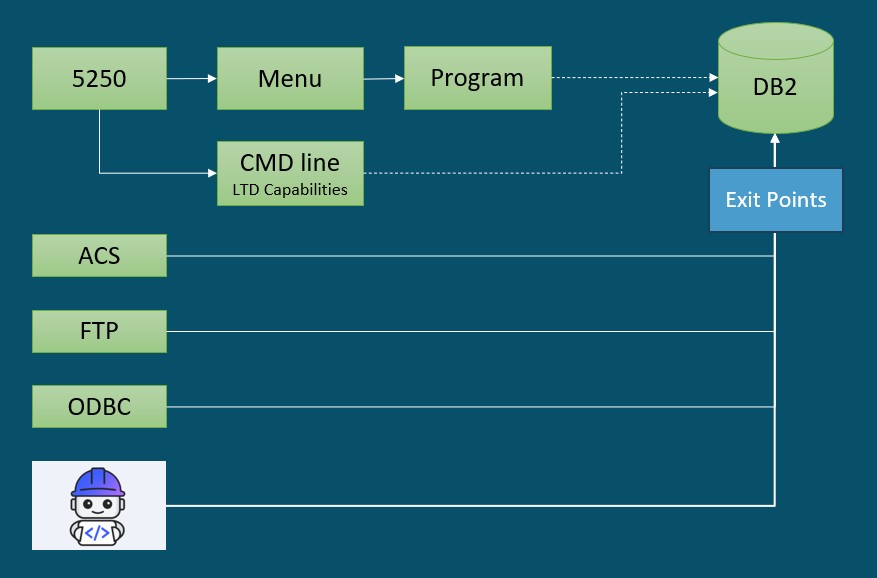
Any direct connection to IBM i bypasses native application security and Limited Capabilities settings in the OS. Extending data access capabilities through agents or code assistants (like IBM Bob) is just another potential exposure. From a security perspective, this is just an extension of the pre-existing security shift around data access that has been an issue on IBM i since we started opening up our systems through ACS, FTP and other connections.
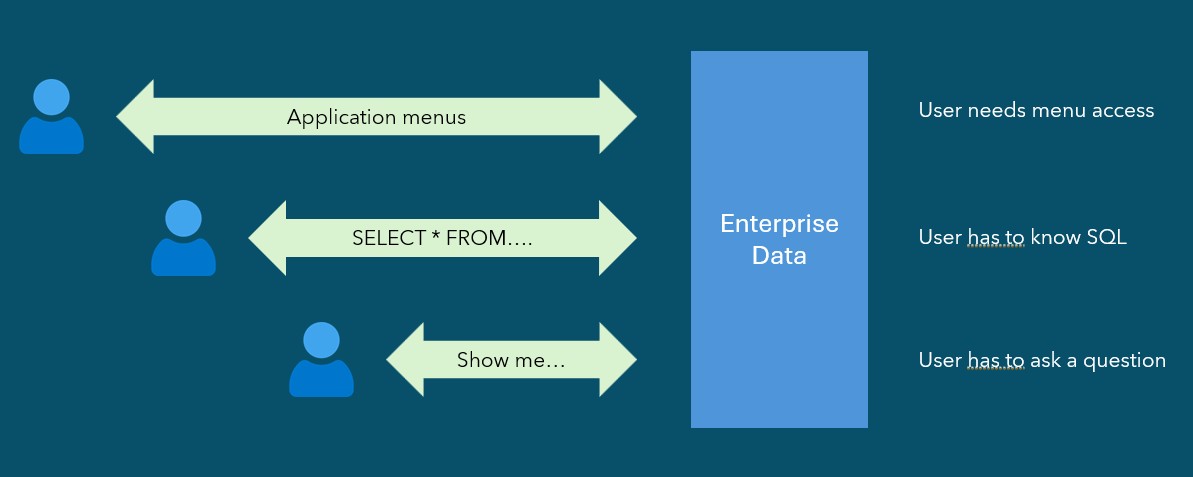
However, AI amplifies this pre-existing risk because it lowers the barriers for users to get access. The historical trend is good: users getting closer to data. This makes work faster and more efficient, but it needs controls. The risky part of the trend is that users need fewer technical skills to access data and, if your data is unsecured, they will likely see or even change data that is out of scope for their work.
You have unsecured data on your system
Based on years of security assessments performed for IBM i shops around the world, we can say with some confidence that you have unsecured data. This is a holdover from legacy security configurations that relied on application menus to control user access to data.
Run this query to find out which libraries an objects are currently unsecured on your system:
select *

  from qsys2.object_privileges

  where system_object_schema = 'PROD_LIB' and

        object_type = '*FILE' and

        ((authorization_name = '*PUBLIC' and object_authority <> ‘*EXCLUDE’)

        or

          owner <> 'PROD_OWNER');
Exit points act as a firewall between AI and your data
IBM i exit point technology provides the opportunity to analyze inbound access requests from AI, log the request and apply access controls rules to accept or reject the request. The goal is not to deny users the ability to use AI. Rather, the goal is to unleash the power of AI, but only for access to authorized objects and CL commands.
In addition to access controls, exit point logging provides full visibility into what users (including autonomous AI agents) are trying to do on your system. This level of visibility is vital, particularly for agentic AI. You need to know what your agents are doing.
AI on IBM i needs exit points
Our SafeNet exit point management software can control AI out of the box. As we said earlier, do not go into AI blind. We recommend including exit point technology as a critical component (and cost) of implementing AI on IBM i.
RELATED POSTS
BROWSE KISCO U
PRODUCT CONTENT